श्री दत्तभक्तांची राजधानी Capital of Datta Devotees
कृष्णा-पंचगंगा संगमावरील श्री नृसिंह सरस्वती स्वामींची दत्तभक्तांची राजधानी The Capital of Datta devotees at the holy confluence of Krishna-Panchganga
श्री नृसिंह सरस्वतींच्या नावाने ओळखल्या जाणाऱ्या या क्षेत्राला दत्तभक्तांमध्ये दत्तभक्तांची राजधानी म्हणून स्थान आहे. वासुदेवानंद सरस्वती उर्फ टेंबेस्वामींनी भारतभ्रमण केल्यानंतर येथे वास्तव्य केलं आणि नृसिंहवाडीला "दत्तभक्तांची राजधानी" असे संबोधले आहे.
This sacred Kshetra, known by the name of Shri Nrusinha Saraswati, holds the place of honor as "the capital of Datta devotees." Vasudevanand Saraswati (Tembe Swami), after his travels across India, resided here and declared Nrusinhwadi to be the Royal Capital of Lord Dattatreya's devotees.
१३७८ मध्ये कारंजा येथे नृसिंह सरस्वतींचा जन्म झाला. १३८८ मध्ये त्यांनी संन्यास दीक्षा घेतल्यानंतर ते तीर्थाटनास निघाले. त्यादरम्यान १४२१ साली त्यांचा मुक्काम औदुंबरी क्षेत्री होता, तर १४२२ मध्ये कृष्णा पंचगंगा संगमानजीकच्या गावात होता. येथे तब्बल बारा वर्षे तपश्चर्या केली आणि १४३४ मध्ये मनोहर पादुका व अन्नपूर्णा जाह्नवीची स्थापना केली.
Born in 1378 at Karanja, Shri Nrusinha Saraswati took Sanyas initiation in 1388. He arrived at the Krishna-Panchganga confluence in 1422 and performed penance here for twelve full years. In 1434, he established the sacred Manohar Padukas and Annapurna Jahnavi at this site before proceeding to Gangapur.
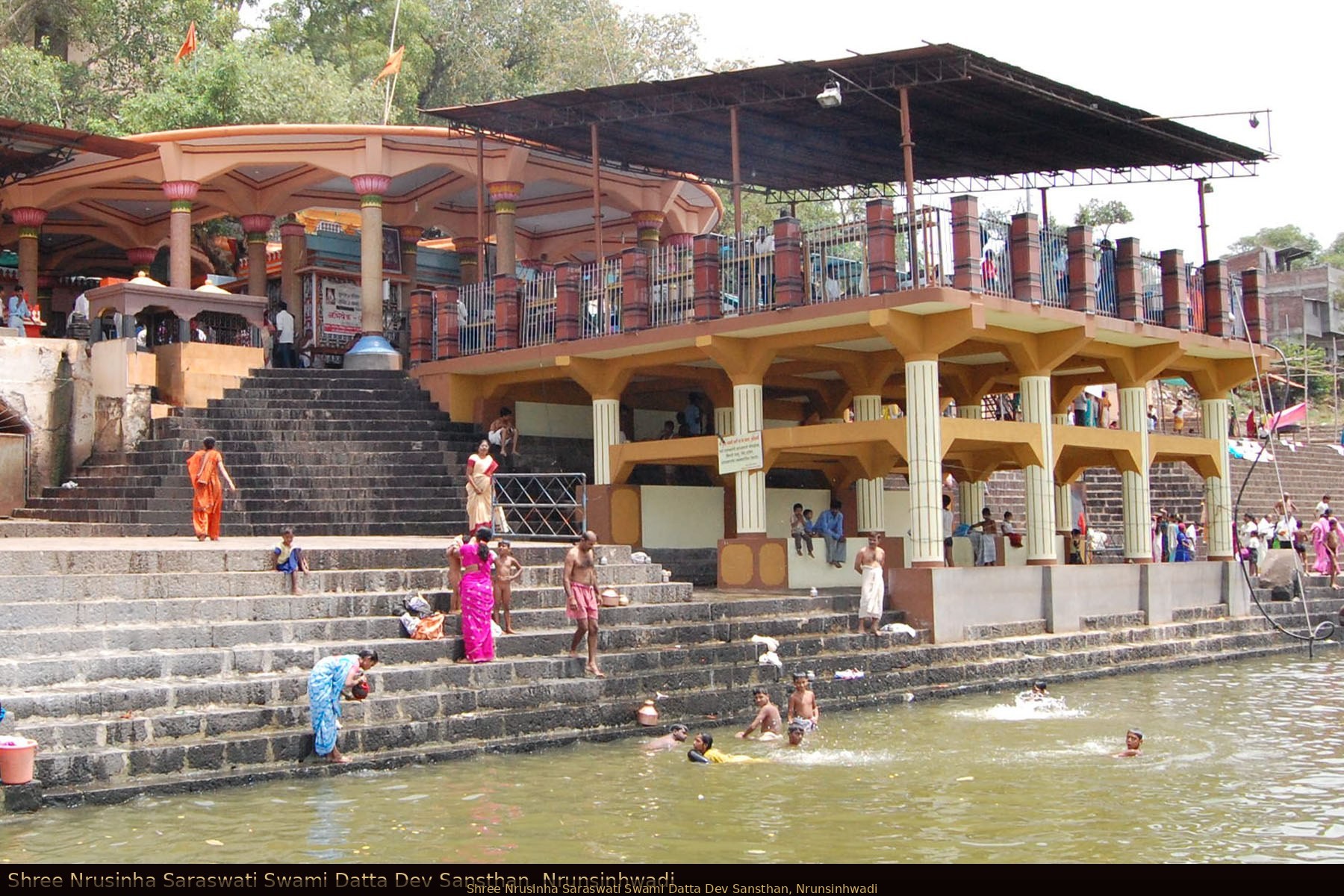
कृष्णा व वेण्णा आणि पंचगंगा नद्यांचा पावन संगम येथे होतो. पंचगंगा म्हणजे कुंभी, तुला, भद्रा, सरस्वती आणि भोगावती या पाच पवित्र नद्यांचे मिलन होय. या संगमाला विशेष महत्त्व आहे कारण काशी विश्वेश्वराचाही येथे निवास असल्याचे मानले जाते.
The holy confluence of Krishna and Panchganga rivers — where five sacred rivers (Kumbhi, Kasari, Tulsi, Saraswati and Bhogavati) meet. This confluence is especially significant as Kashi Vishweshwar is also believed to reside here.
मंदिराच्या परिसरात असलेला प्राचीन औदुंबर वृक्ष हा दत्त संप्रदायात अत्यंत पवित्र मानला जातो. या वृक्षाखाली एका शिळेवर स्वामींनी मनोहर पादुका स्थापित केल्या. औदुंबर, शमी, वड, बेल, पळस, चंदन अशा दिव्य वृक्षांनी हा परिसर व्यापलेला होता.
The ancient Audumbar (fig) tree in the temple complex is sacred in Datta tradition. Under this tree, Swami established the divine Manohar Padukas on a stone slab. The entire area was once dense with Audumbar, Shami, Banyan, Bel, Palas and Chandan trees.
श्री नृसिंह सरस्वती स्वामींनी एका काळ्या पाषाणावर ओंकाराची आकृती रेखली व मानवी पावलांच्या मुद्रा रेखाटल्या. शंख, चक्र, पद्म, गदा अशा शुभचिह्नांसह हे मनोहर पादुकायुगुल प्रकट झाले. या पादुकांचे दर्शन घेणे अत्यंत पुण्यप्रद मानले जाते.
Swami drew the symbol of Om on a black stone slab, then outlined the impressions of human feet. With auspicious symbols of Shankha, Chakra, Padma and Gada, the divine Manohar Padukas manifested. Darshan of these Padukas is considered supremely meritorious.
मंदिराचे सध्याचे स्वरूप विजापूरच्या आदिलशाह बादशहाने उभारले. त्याच्या मुलीची दृष्टी श्री गुरुदत्तांच्या विभूतीने परत आल्यावर त्याने हे मंदिर बांधले. त्यामुळे मंदिराला कळस नाही — हे ऐतिहासिक वैशिष्ट्य आहे.
The present form of the temple was built by King Adilshah of Vijapur after his daughter's sight was miraculously restored. Due to this Muslim king's construction, the temple has no kalash (spire) — a unique historical feature.
या गावात एकूण ८ तीर्थे आहेत — शुक्ल पापविनाशी, सिद्ध, अमर, कोटी, शक्ती, प्रयाग, संगम तीर्थ आणि काम्य तीर्थ. कृष्णा नदी उत्तरेकडून दक्षिणेकडे वाहत असल्याने या संगमाला विशेष महत्त्व आहे. म्हणजे हे प्रयागसमान मुक्तीक्षेत्र आहे
This village has 8 sacred tirthas — Shukla, Papvinashi, Siddha, Amar, Koti, Shakti, Prayag and Sangam. The Krishna river flows north to south at this point, adding special spiritual significance to this sacred confluence.
कृष्णेच्या पैलतीरावर अमरापूर (औरवाड) येथे अमरेश्वराचा निवास आहे. त्यांच्या सन्निध चौसष्ट योगिनींचा परिवार आहे. श्री नृसिंह सरस्वती महाराजांची सेवा योगिनींनी केली. श्री गुरुचरित्रात या स्थानाचा उल्लेख आहे. महाराजांच्या आज्ञेने त्यांनी येथे मुक्काम केला आहे.
On the opposite bank at Amarapur lives Lord Amareshwar, surrounded by 64 Yoginis. The Yoginis served Shri Nrusinha Saraswati during his stay. This place is mentioned in the sacred Shri Gurucharitra text.
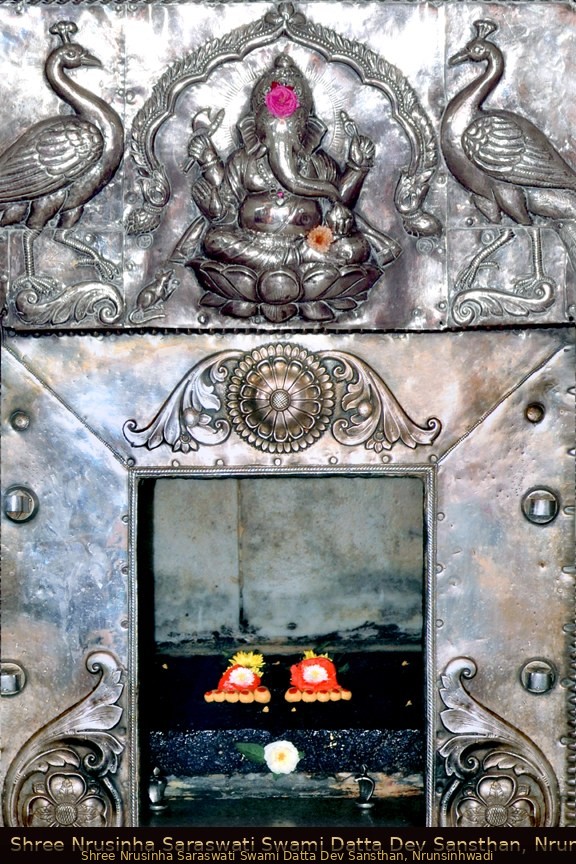
श्री नृसिंह सरस्वती स्वामींनी स्वहस्ते स्थापित केलेल्या मनोहर पादुका. गणपती, मोर, पुष्पांच्या चांदीच्या कलाकुसरीने मढवलेल्या या पवित्र द्वारातून भक्त पादुकांचे दर्शन घेतात. "पादुकांपर्यंत पाणी आल्यावर उत्सव मूर्ती टप्प्याटप्प्याने हलवली जाते" — दरवर्षीच्या नित्य कार्यक्रमाचे पालन येथे काटेकोरपणे होते.
The Manohar Padukas established by Shri Nrusinha Saraswati Swami himself. Devotees receive darshan through the silver-crafted doorway adorned with Ganesha, peacocks and flowers. When flood waters reach the Padukas, the Utsav Murti is carefully moved — the annual ritual is followed meticulously every year.
पहाटे तीनपासून ते रात्रौ दहा वाजेपर्यंत दत्तभक्तीचा जागर येथे सुरू असतो. काकड आरती, पंचामृत अभिषेक, महापूजा, पवमान पठन, धूप दीप आरती, पालखी सोहळा आणि शेजारती असा नित्यक्रम अत्यंत श्रद्धेने आणि उत्साहाने आजही सांभाळला जात आहे.
From 5:00 AM to 10:00 PM, the devotional fervor never ceases — Kakad Aarti to Shej Aarti. Kakad Aarti, Panchamrit Abhishek, Mahapuja, Pavaman Pathan, Dhoop-Deepa Aarti, Palkhi Sohala and Shej Aarti — the daily schedule is maintained with great devotion and enthusiasm to this day.
दिवसाचा मंगलमय शुभारंभ. सूर्योदयापूर्वी श्री दत्त महाराजांना कृष्णामातेच्या शीतल जलाने स्नान घातले जाते. षोडशोपचार पूजा केली जाते.
Auspicious beginning of the divine day. Before sunrise, Shri Maharaj is bathed with Krishna river water. Panchopchar puja is performed and saffron cloth is offered.
भक्तजनांच्या तर्फे करण्यात येणारी पंचामृत पूजा व रुद्राभिषेक ह्या वेळेत अर्पण केले जातात. दूध, केळी, आम्रस, दही, तूप, मध अर्पण करून मांगलिक स्नान घातले जाते.
Devotees from far and wide arrive, bathe and participate in Panchamrit puja. The Padukas are bathed with milk, banana, mango pulp, curd, ghee and honey, followed by warm water.
दिवसातील मुख्य महापूजा. दूध, दही, तूप, मध, साखर, केळी, व आम्रस तसेच विविध फळांचा रस अर्पण करून मंगळिक उष्णोदक स्नानाने सुरुवात करून, चंदनाचा लेप अर्पण केला जातो. त्यानंतर पादुकांवर सुगंधित पुष्पांचे आच्छादन, तुळशीपत्र, बिल्वपत्र अर्पण. रौप्य ताटात षड्रस अन्नाचा नैवेद्य अर्पण करून महाराजांची महापूजा संपन्न होते.
The main ritual of the day. Padukas are adorned with fragrant flowers, Tulsi and Bilva leaves. Naivedya of six-flavored food in silver plate. Devotees sing numerous aratis in worship of Maharaj.
विद्वान ब्राह्मणवृंद श्री महाराजांपुढे वेदमंत्रांचे पठण करतात. सायंकाळी पुराणिकांकडून श्री महाराजांना दिव्य पुराणांचे श्रवण करविले जाते.
Learned Brahmin scholars recite Vedic mantras melodiously before Shri Maharaj. In the evening, the Puranas are recited by Puranikas for Shri Maharaj to hear.
धूप अर्पण करून मंगल आरती. नंतर उत्सव मूर्ती दिव्य वस्त्र व दिव्य अलंकारांनी सुशोभित करून छत्र-चामरासह भव्य पालखी मिरवणूक निघते. मंगल वाद्यांच्या गजरात मंदिराभोवती तीन प्रदक्षिणा होतात.
After incense offering, the Utsav Murti is adorned with divine garments and ornaments. A grand Palkhi procession with royal umbrella and fans sets forth. Three circumambulations amid the sound of auspicious instruments.
दिवसाचा शेवटचा सोहळा. वैदिकांच्या चारही वेदांच्या मंत्रपठणाने शेजआरती केली जाते व त्यानंतर भक्तांसाठी दर्शन बंद होते..
The final ceremony of the day. Shri Maharaj enters the resting chamber and the doors are closed. All devotees and archaks depart for their homes.
"सुखासाठी करसी तळमळ । तरी तू वाडीस जाई एक वेळ । मग तू अवघाची एकरूप होसी । जन्मोजन्मींचे दुःख विसरसी ॥"
"If you yearn for true happiness, visit the Wadi at least once. Then you will become one with the Divine and forget the sorrows of all your lifetimes."— प. प. श्री वासुदेवानंद सरस्वती टेंबे स्वामी महाराज